Tribune Nigeria News: Wike, Japan partner to update 1979 Abuja Master Plan
Published on: 03/26/2026
By Lawrence Bajah
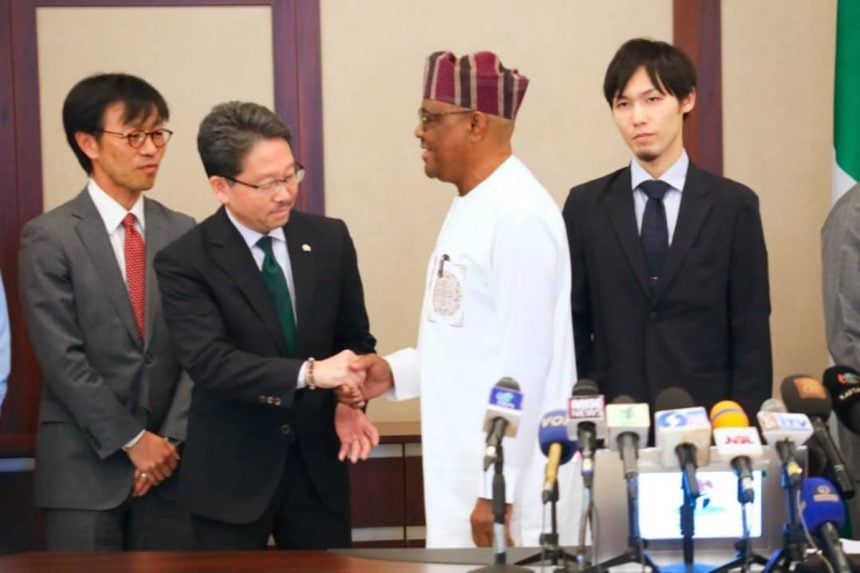
The Federal Capital Territory (FCT) Minister, Barr. Ezenwo Nyesom Wike, has signalled a major shift in the urban development trajectory of the nation’s capital, announcing a strategic partnership with the Government of Japan to update the 1979 Abuja Master Plan.
The move, aimed at aligning the city’s growth with modern realities through to the year 2050, was the highlight of a courtesy visit by a high-level Japanese delegation to the FCT Ministry on Tuesday.
The delegation was led by the Japanese Ambassador to Nigeria, Mr Suzuki Hideo, and the Chief Representative of the Japan International Cooperation Agency (Nigeria), Mr Ishigame Keiji.
Speaking during the meeting, Wike expressed profound appreciation for Japan’s historical and technical contributions to Nigeria, noting that the original blueprint of the FCT owes much to Japanese expertise.
“Thank you for coming this morning. On behalf of the FCT Administration, I appreciate the relationship between Nigeria and Japan,” Wike said. “I am fully aware of the projects through JICA. It is very key for us because I do know the design of Abuja was done by Japan, and now they need to look at it again in order to carry out other structural development.”
The Minister commended the Japanese government for its consistency in supporting the education, health and nutrition sectors, specifically highlighting the training of Nigerian teachers in Tokyo.
“We will continue to cooperate with you to see that this is actualised. It should provide an environment where you continue to partner with us and see that the leadership agenda of Mr President comes to reality,” Wike added, while accepting an invitation to lead a delegation to Japan for a high-level study tour.
Earlier, Ambassador Suzuki Hideo lauded Wike’s leadership and reaffirmed Japan’s commitment to “co-creating a shared future” with Nigeria. He emphasised that the development of Abuja as a political and administrative hub is vital for the nation’s overall progress.
“The Government of Japan and JICA have been engaged in various development projects, including not only basic infrastructure such as electricity and healthcare but also the construction of a hub facility that serves as a centre for start-up support,” the Ambassador stated.
Ambassador Hideo also invited the Minister to a handover ceremony scheduled for March 26 for a pilot plastic collection facility, a joint initiative with UNIDO aimed at promoting the plastics value chain in the capital.
Providing a technical breakdown of the intervention, JICA Chief Representative, Mr Ishigame Keiji, revealed that the agency is ready to move quickly into priority infrastructure development with “visible and rapid results.”
“Our goal is to upgrade the original 1979 Master Plan to meet the needs of Abuja up to the year 2050,” Ishigame explained.
“We are focusing on four key value additions: driving economic development and job creation, integrating the private sector, ensuring sustainability through strategic environmental assessment, and addressing contemporary themes like climate resilience and social inclusion.”
Ishigame detailed JICA’s extensive portfolio in the FCT, which includes a $9 million solar power project for water treatment that saves the FCT Water Board ₦31 million annually, an $11 million diagnostic upgrade for the NCDC, and a $12 million project to stabilise the city’s power grid.
The project will be managed by five technical working groups comprising JICA experts and officials from the Federal Capital Development Authority (FCDA). According to the roadmap, 2026 will serve as the “foundational year” for the review, with full implementation strategies expected to be finalised by 2027.
The move, aimed at aligning the city’s growth with modern realities through to the year 2050, was the highlight of a courtesy visit by a high-level Japanese delegation to the FCT Ministry on Tuesday.
The delegation was led by the Japanese Ambassador to Nigeria, Mr Suzuki Hideo, and the Chief Representative of the Japan International Cooperation Agency (Nigeria), Mr Ishigame Keiji.
Speaking during the meeting, Wike expressed profound appreciation for Japan’s historical and technical contributions to Nigeria, noting that the original blueprint of the FCT owes much to Japanese expertise.
“Thank you for coming this morning. On behalf of the FCT Administration, I appreciate the relationship between Nigeria and Japan,” Wike said. “I am fully aware of the projects through JICA. It is very key for us because I do know the design of Abuja was done by Japan, and now they need to look at it again in order to carry out other structural development.”
The Minister commended the Japanese government for its consistency in supporting the education, health and nutrition sectors, specifically highlighting the training of Nigerian teachers in Tokyo.
“We will continue to cooperate with you to see that this is actualised. It should provide an environment where you continue to partner with us and see that the leadership agenda of Mr President comes to reality,” Wike added, while accepting an invitation to lead a delegation to Japan for a high-level study tour.
Earlier, Ambassador Suzuki Hideo lauded Wike’s leadership and reaffirmed Japan’s commitment to “co-creating a shared future” with Nigeria. He emphasised that the development of Abuja as a political and administrative hub is vital for the nation’s overall progress.
“The Government of Japan and JICA have been engaged in various development projects, including not only basic infrastructure such as electricity and healthcare but also the construction of a hub facility that serves as a centre for start-up support,” the Ambassador stated.
Ambassador Hideo also invited the Minister to a handover ceremony scheduled for March 26 for a pilot plastic collection facility, a joint initiative with UNIDO aimed at promoting the plastics value chain in the capital.
Providing a technical breakdown of the intervention, JICA Chief Representative, Mr Ishigame Keiji, revealed that the agency is ready to move quickly into priority infrastructure development with “visible and rapid results.”
“Our goal is to upgrade the original 1979 Master Plan to meet the needs of Abuja up to the year 2050,” Ishigame explained.
“We are focusing on four key value additions: driving economic development and job creation, integrating the private sector, ensuring sustainability through strategic environmental assessment, and addressing contemporary themes like climate resilience and social inclusion.”
Ishigame detailed JICA’s extensive portfolio in the FCT, which includes a $9 million solar power project for water treatment that saves the FCT Water Board ₦31 million annually, an $11 million diagnostic upgrade for the NCDC, and a $12 million project to stabilise the city’s power grid.
The project will be managed by five technical working groups comprising JICA experts and officials from the Federal Capital Development Authority (FCDA). According to the roadmap, 2026 will serve as the “foundational year” for the review, with full implementation strategies expected to be finalised by 2027.